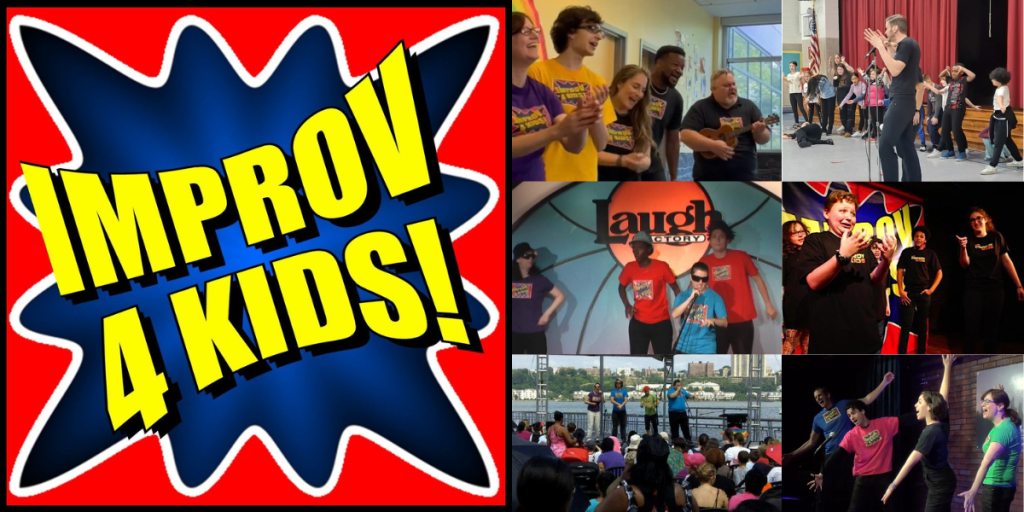
In our previous blog post, we discussed the many benefits of improv for kids. Today, we’ll dive deeper into how improv can be a powerful tool for teachers in K-12 classrooms.

Check out our classes and comedy camps in Times Square NYC. We also host private workshops daily and send teaching artists to schools for shows, workshops, residencies and professional development programming.
Improv and the Classroom: A Perfect Match
Improv is not just for professional actors and comedians. It’s a versatile tool that can be seamlessly integrated into various subjects and grade levels. Here’s how improv can spark engagement in your classroom:

- Breaking the Ice: Improv games are a fun and effective way to build rapport and create a positive learning environment.
- Encouraging Participation: Improv activities can help shy or hesitant students feel more comfortable participating in class discussions.
- Developing Critical Thinking: Improv exercises often require students to think on their feet, solve problems creatively, and make quick decisions.
- Boosting Confidence: Improv provides a safe space for students to experiment, take risks, and express themselves without fear of judgment.
- Fostering Collaboration: Many improv games require teamwork and cooperation, teaching students valuable collaboration skills.
Improv Activities for the Classroom
Here are a few simple improv activities you can try in your classroom:
- Storytelling Circles: In a circle, collectively write a story one word at a time.
- “Yes, And…” Storytelling: Team up to write a story one sentence at a time, starting with the words YES AND…
- Character Interviews: Students create and interview fictional characters, developing their personalities and backstories.
- Role-Playing Scenarios: Improvise simple skits. Give 2-3 students a location or situation. Direct students to simply have fun and have a conversation in that place.
Improv: A Journey of Discovery
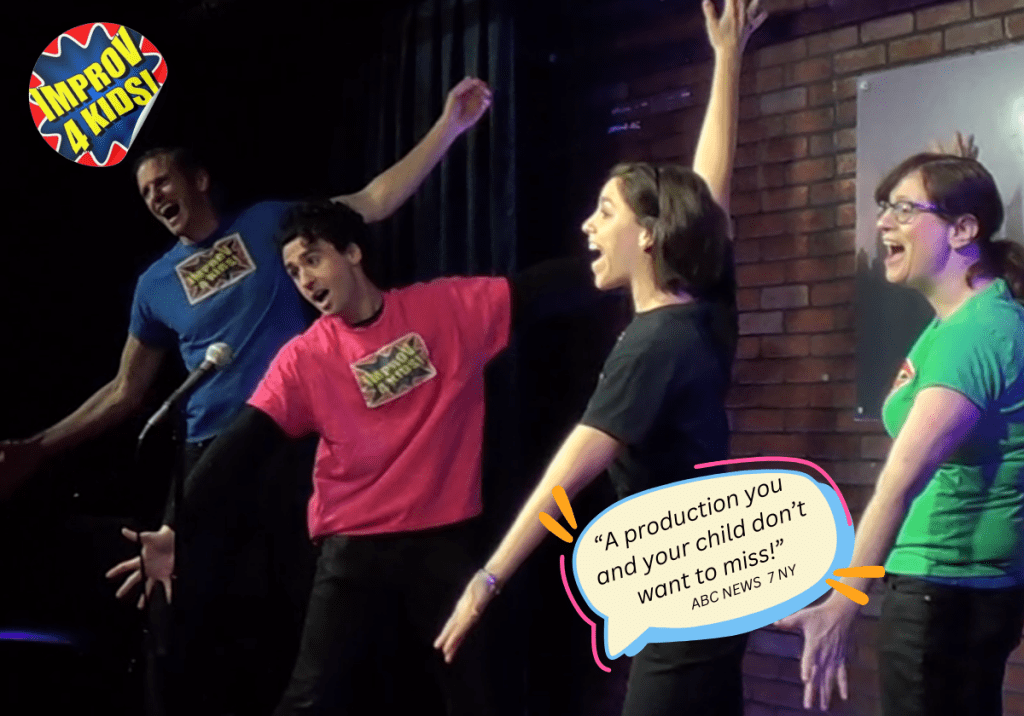
Improv is not just about being funny; it’s about learning, growing, and discovering your potential. By incorporating improv into your classroom, you can create a dynamic and engaging learning environment where students can thrive.
Are you ready to try improv in your classroom?
If you’re interested in learning more about improv and its applications in education, we encourage you to explore our website and sign up for our newsletter. We also offer professional development workshops for teachers, providing practical strategies and tools for integrating improv into your curriculum.
Stay tuned for our next blog post, where we’ll explore the connection between improv and social-emotional learning (SEL).
Remember, improv is not just about being funny; it’s about learning, growing, and discovering your potential. By incorporating improv into your classroom, you can create a dynamic and engaging learning environment where students can thrive.


 The original improv 4 Kids