The “Yes, And…” philosophy is the heartbeat of improvisational comedy, but its true power lies far beyond the stage. It’s a foundational principle for effective communication, collaboration, and growth in any setting—especially the classroom. For educators, adopting this mindset and its techniques can transform the learning environment, fostering creativity, psychological safety, and a spirit of joyful collaboration.
Here are 10 ways to employ the “Yes, And…” philosophy in your classroom.
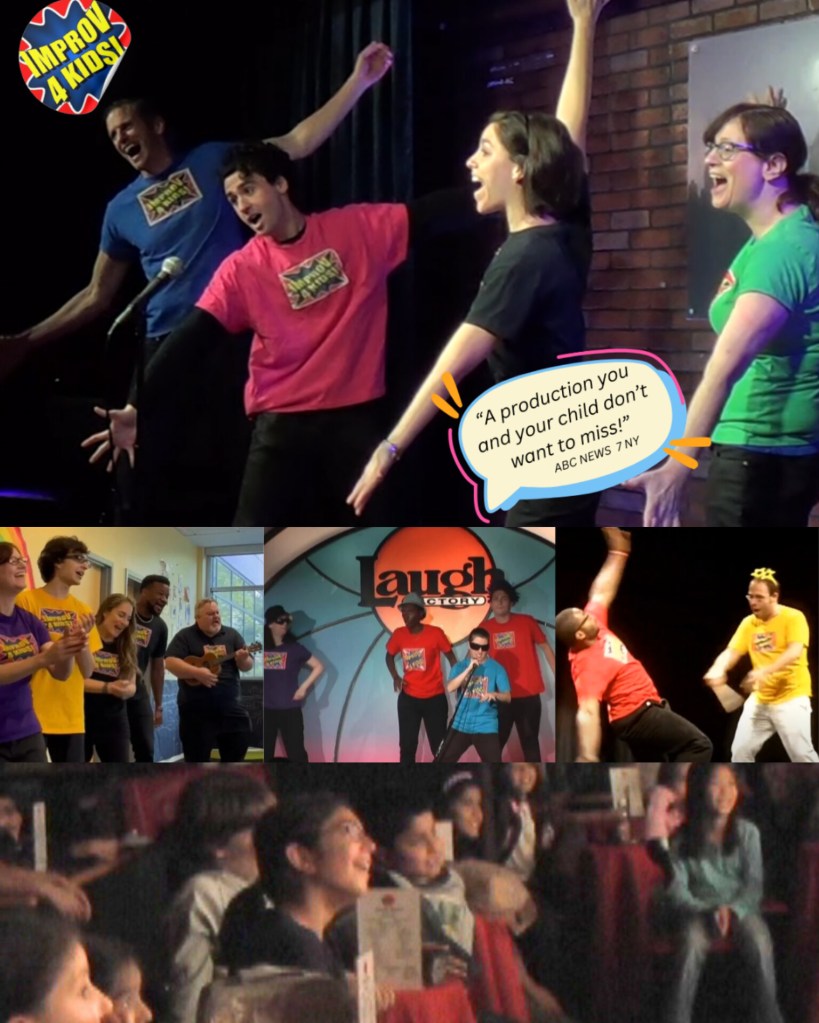
Improv 4 Kids has 20+ years of family programming live from Times Square and offering k12 school shows, workshops, residencies, and professional development programming. Check menu links above for public skows and classes EMAIL for private events. NYC DOE VENDORS
1. Affirm and Build on Student Ideas
The most direct application of “Yes, And…” is in how you respond to students. Instead of shutting down an unconventional answer with a “No,” a teacher can accept it and then build on it to deepen the conversation.[1] This validates a student’s contribution, fostering a sense of being heard and valued.[1]
2. Make it a “Group Sport” for Collaboration
Improv is a fundamentally collaborative art form, a “group sport”.[1] The “Yes, And…” principle, along with the improv tenet to “make your partner look good,” shifts the focus from individual success to collective success.[3] When applied to classroom projects, this fosters teamwork, shared responsibility, and a supportive environment where students thrive together.[3]
3. Encourage a “Growth Mindset” with a “Failure Bow”
In improv, there are no mistakes, only opportunities.[17] By encouraging students to take a “failure bow” after a mistake, you can normalize setbacks as opportunities for growth, rather than moments of shame.[1] This helps students develop resilience and confidence to take creative risks without fear of judgment.[10, 17]
4. Ignite Creativity with “First Draft” Games
Improvisation can serve as a “first draft” for student writing, helping them generate ideas for characters, plots, and dialogue before they even put pen to paper.[2] Games like “One Word Story,” where students add a single word to a shared narrative, build foundational storytelling skills in a fun, collaborative way.[2, 13]
5. Improve Active Listening with Games
Improv demands intense listening.[1] Games like “One Word Story” and “Mind Meld” require students to listen intently to their peers’ contributions to keep the narrative or conversation moving forward.[3, 12] This practice helps them become more present and active listeners, a skill vital for academic and social success.[6]

6. Address Bullying with Empathy-Building Exercises
The “Yes-and, why?” game uses the improv principle to help students explore the underlying motivations behind a character’s actions, including challenging or bullying behaviors.[5] It encourages students to consider another’s perspective, fostering a deeper understanding of human behavior and opening the door for honest, productive discussions.[5]
7. Boost Public Speaking Skills and Confidence
Improv provides a low-stakes environment for students to practice public speaking.[6] Speed games can quicken response time and improve public speaking skills, while the supportive, non-judgmental environment helps build confidence.[1, 6]
8. Make Learning Kinesthetic and Engaging
Many improv games are physical, requiring students to get on their feet and “commit to gestures”.[2] This kind of kinesthetic learning supports retention, engagement, and motivation, making lessons more memorable and impactful.[2]
9. Support Professional Development for Teachers
The “Yes, And…” philosophy can also be applied to professional development. Workshops for educators can use the principle to strengthen adaptive leadership skills, refine communication, and build momentum for innovation and change.[4] This approach can provide a genuinely joyful way to strengthen relationships and morale among school staff.[4]
10. Build a Positive School Culture from the Ground Up
Ultimately, the “Yes, And…” philosophy serves as a systemic change agent.[1] By creating a culture where it’s safe to take risks and where everyone’s contributions are valued, improv can help build a school community defined by psychological safety, collaboration, and continuous growth.[13]

It’s the last week of summer, but the fun continues this fall, live from Times Square NYC and touring schools, community centers and family events nationwide!
Footnotes
[1] Improv is about saying, “Yes, I accept your idea and I’m going to make it better” instead of “no, I have a better idea.” The principle of “Yes, And…” is echoed in education, as teachers ask open-ended questions that allow for many responses, then scaffold information on top to deepen the conversation.[1] Negation, or shutting down a student’s idea, “defeats the students”.[1]
[2] Improvisation can act as a “first draft” for student writing, helping to generate ideas for characters, plots, and dialogue before they are written.[2] This can also help with dialogue, by changing the word “said” to descriptive verbs like “whined” or “yelled”.[2] Improv is a form of kinesthetic learning that gets students on their feet and “committing to gestures,” which helps with retention, engagement, and motivation.[2]
[3] Improv is a collaborative art form that helps students develop social skills and teamwork.[3, 7] The “making your partner look good” principle shifts the focus from individual success to collective success, which creates a supportive environment.[3] The “Yes, And…” principle promotes deep listening, teamwork, and creativity.[3]
[4] Applied improv workshops for educators can strengthen adaptive leadership skills, refine communication, and rejuvenate connection and motivation among school staff.[4] The workshops are described as a “genuinely joyful way” to strengthen relationships and inspire collaboration and mutual support.[4]
[5] The “Yes-and, why?” game encourages students to think about why a person might engage in a specific behavior, such as bullying.[5] The game doesn’t single out anyone but instead helps students discuss the underlying motivations for the behaviors, which helps foster open communication and a safe space to discuss concerns about bullying.[5]
[6] Improv exercises emphasize active listening, quick thinking, and effective collaboration.[6] This leads to more meaningful and productive conversations.[6]
[7] Improv is a “group sport” that builds trust and effective interaction among team members.[1]
[8] Using improv games as a “first draft” helps students generate ideas, release inhibitions, and get into a “creative flow” before they begin writing.[2]
[9] Social-emotional learning (SEL) programs are linked to decreased emotional distress and a reduction in bullying and aggression.[9]
[10] Improv exercises teach that mistakes are opportunities for growth, rather than moments of shame.[1, 17] This helps people handle setbacks with grace and confidence.[1]
[11] Improv’s play-based activities are effective at reducing anxiety and increasing engagement among English Language Learners.[11]
[12] Improv games such as “One Word Story” and “Gibberish Interpreter” help develop communication, collaboration, and listening skills in a fun and engaging way for language learners.[12]
[13] Improv creates a “safe space” for children to explore and express emotions.[3] Games like the “MASK game” help students identify and understand emotions.[13] “Emotional Carpool” teaches them to manage and express feelings in healthy ways.[13]
[14] Improv assemblies can be “meaningful and memorable” by focusing on themes like accepting others for their differences and showing kindness.[14] Teachers have noted the presenters’ ability to make “connections… with our students” and maintain a “on-point” alignment with educational standards.[14]
[15] Improv 4 Kids shows are praised for their ability to bring comedy alive for children, with a focus on creativity, collaboration, and spontaneous wit.[8] The interactive nature of the shows, which often involves getting students on stage to participate, is highlighted as a key component of a memorable experience.[8, 15]
[16] The Second City has accredited college programs in partnership with Columbia College.[16] They also offer specialized classes, such as “Improv for Anxiety” and “Public Speaking,” and have shifted to virtual classes during the pandemic, increasing accessibility.[16]
[17] The mindset that “imperfection is acceptable” helps students manage anxiety and take risks.[17]
“Mind Meld” is a word association game that fosters communication and creativity.[12]
The “Yes, And…” principle supports collaboration and momentum-building for innovation and transformative change.[4]
 The original improv 4 Kids