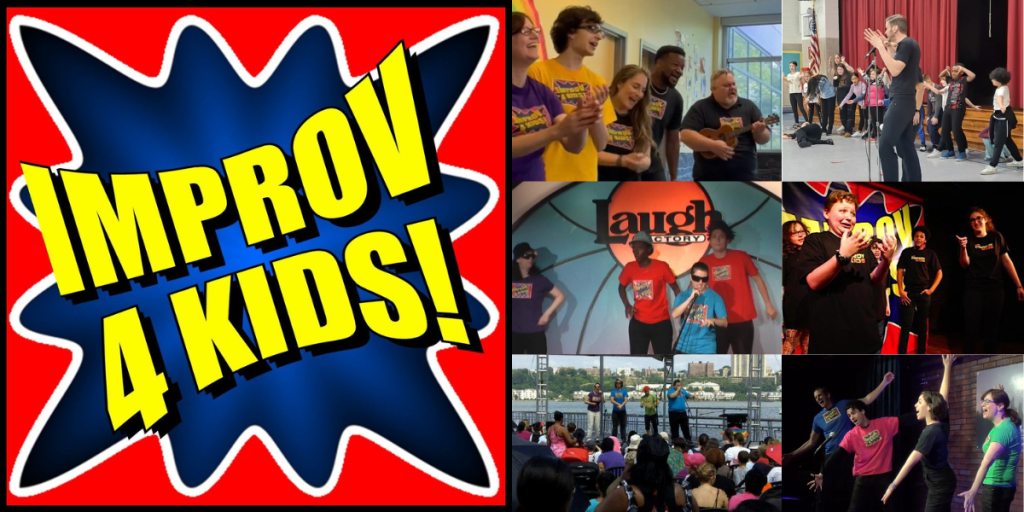
When you think of improvisational theater, you might picture quick wit, hilarious scenes, and spontaneous storytelling. But what if we told you that improv is far more than just acting? It’s a dynamic and powerful tool for developing crucial emotional intelligence skills in children of all ages, translating spontaneous play into essential life competencies.
What is Emotional Intelligence (EI)?
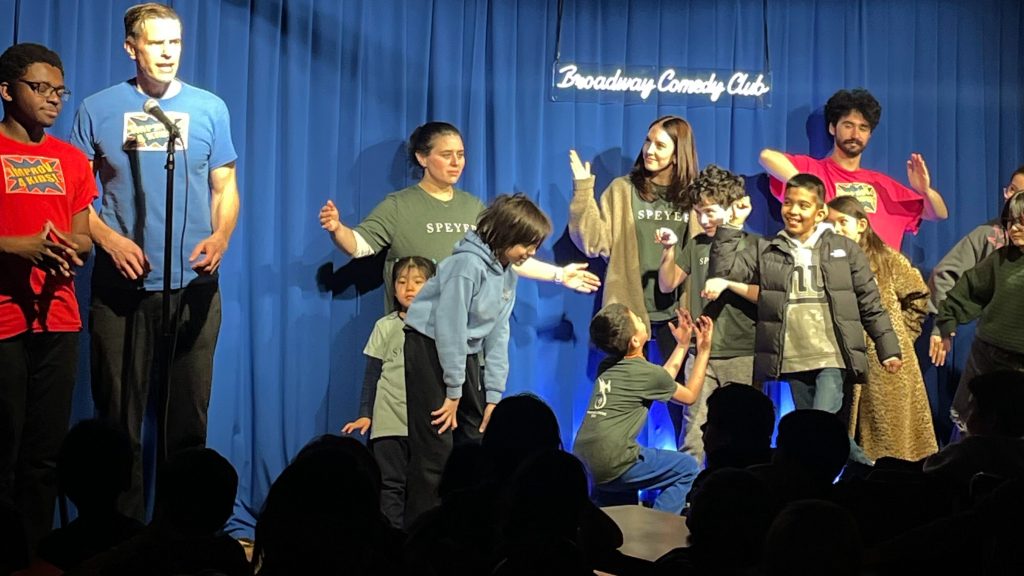
Emotional Intelligence (EI), often called EQ, is the ability to understand and manage your own emotions, and to recognize and influence the emotions of those around you.1 It’s about accurately identifying feelings, comprehending their meaning, and understanding how these emotional states impact behavior—both your own and others’.2
Psychologist Daniel Goleman, who popularized the term, outlines five key components of Emotional Intelligence, all of which are naturally cultivated through improv:
- Self-awareness: A clear understanding of your own feelings, strengths, and weaknesses, and how your emotions affect others.2
- Self-regulation: The ability to manage your emotions, thoughts, and behaviors effectively, avoiding impulsive decisions and thinking objectively before acting.2
- Motivation: Having high personal standards and consistently striving towards goals, often with optimism.4
- Empathy: The crucial capacity to understand and share the feelings of others, effectively “putting yourself in someone else’s shoes”.2
- Social Skills: The art of making genuine emotional connections through communication, managing relationships, and resolving conflicts constructively.2
How Improv Cultivates Emotional Intelligence
Improvisation inherently demands creativity, spontaneity, and a high level of emotional intelligence from its participants.3 It encourages embracing unpredictability and thriving in the moment, skills vital for decision-making, social interactions, and problem-solving in daily life.7
Here’s how improv directly builds these EI components in children:
- Self-Awareness: Improv provides a safe space for children to explore and express a wide range of emotions.8 By stepping into different characters and scenarios, students learn to tap into and convey their feelings authentically, gaining a better understanding of their own emotional landscape.8 Games like “Emotion Hotline” allow kids to role-play hypothetical scenarios and identify different emotions, while “Mirror Mirror” helps them become aware of their own body language and facial expressions.10
- Self-Regulation: Through the exploration of various characters and their emotional journeys, children learn how to manage and express their feelings in healthy ways.8 Improv encourages staying present and emotionally aware, which can significantly impact their ability to regulate emotions.7 The playful nature of improv, where mistakes are opportunities, reduces anxiety and helps children develop coping strategies for stress.8
- Empathy and Perspective-Taking: One of the most profound benefits of improv is its unique ability to cultivate empathy.8 When students embody a character, they are compelled to see the world through someone else’s eyes, even if that perspective differs greatly from their own.8 This practice helps them understand diverse viewpoints and emotions, fostering a deeper sense of compassion and tolerance.8 Activities like “Character Switch” (role reversal) literally put students in another’s shoes, forcing immediate and deep perspective-taking.15
- Communication Skills: Improv inherently demands both verbal and non-verbal expression.8 Students learn to communicate more effectively by developing active listening skills, interpreting body language, and mastering the use of their voice to convey emotions and ideas.8 The foundational improv principle of “Yes, And…” requires players to accept and build upon whatever their partner initiates, actively promoting deep listening, teamwork, and creativity.6 Games like “One-Word Story” intensely hone active listening and collaborative storytelling.19
- Social Skills & Collaboration: Improv is fundamentally a collaborative art form, requiring students to work closely with peers to create something successful.8 This fosters the importance of teamwork, compromise, and shared responsibility.8 The principle of “making your partner look good” shifts focus from individual performance to collective success, building a profoundly supportive environment.19
Beyond the Stage: Essential Life Skills
The skills honed through improv extend far beyond the classroom or stage. Children who regularly engage in improvisational theater develop:
- Quick Thinking and Problem-Solving: The unscripted nature of improv trains individuals to adapt rapidly to unexpected situations, make swift decisions, and generate creative solutions under pressure.7
- Confidence Building: Stepping out of one’s comfort zone and saying “yes” to the unexpected helps participants overcome the fear of making mistakes, building confidence in public speaking and pursuing new opportunities.8 Research shows a significant positive effect on self-concept, especially for students who initially have lower self-esteem.25
- Resilience and Adaptability: The process of improv is filled with challenges, teaching children that mistakes are a natural and necessary part of learning, and that persistence leads to growth.8 Improv cultivates a mindset where errors are seen as opportunities, fostering psychological resilience.7
In essence, improv is a “rehearsal for reality” 27, providing a safe space to practice navigating complex social and emotional challenges without real-life consequences.27 This embodied, active learning approach leads to a deeper, more integrated understanding of social-emotional skills than passive learning alone.28
At improv4kids.com, we believe in the transformative power of play. By engaging in improvisational theater, your child isn’t just learning to act; they’re building the real-world emotional intelligence that will empower them to thrive in school, relationships, and all aspects of life.
Ready to unlock your child’s full potential? Explore our programs and see how improv can make a difference!
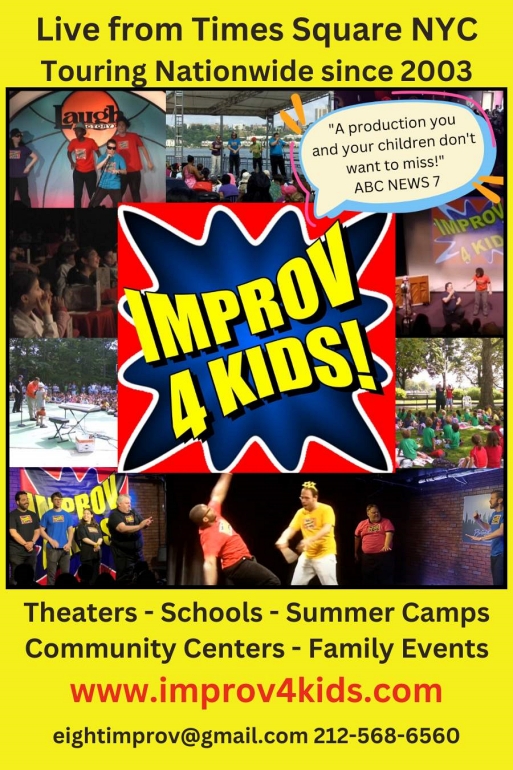
Since 2003, Improv 4 Kids has been delivering the laughs live from Times Square NYC and touring schools, aummer camps, military bases, community centers and family events nationwide. Check menu for public shows & classes for kids, teens and families, SUMMER CAMP TOO!!! EMAIL for more information on group sales and private bookings!
NYC DOE VENDORS
- Field Trips: Shows and workshops for student groups from around the world!
- Assemblies, workshops, residencies and professional development programming at schools.

