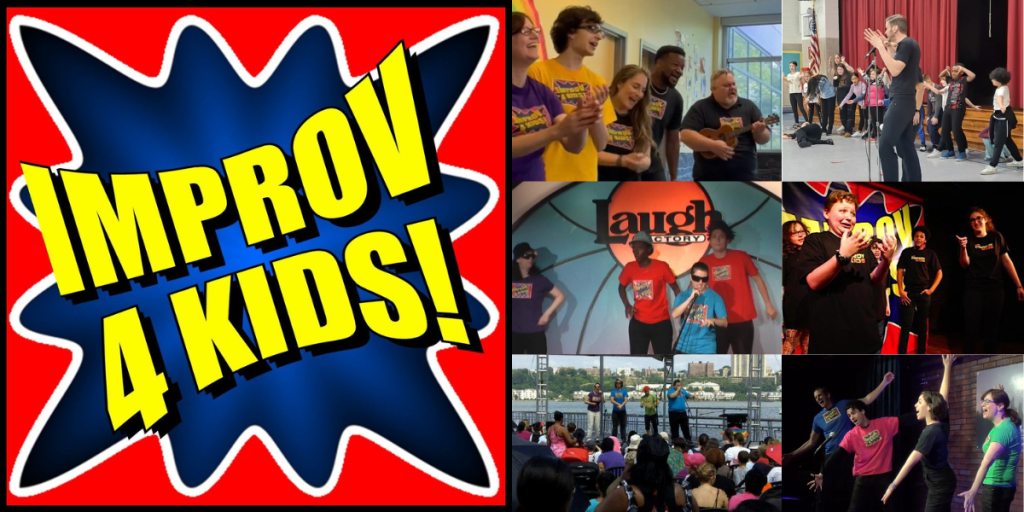
We all want our kids to thrive. To be engaged, confident, and ready for whatever life throws their way. But in a world overflowing with information and distractions, how do we equip them with the essential skills to navigate it all? At Improvikids, we believe the answer lies in the unexpected power of improv comedy – not just for performance, but for life.
Recently, I wrapped up an incredible four weeks working with six different first-grade classes in a Brooklyn school. Six-year-olds, many with special needs, and all with a natural struggle with focus – a struggle, let’s be honest, that many adults share! Yet, after just three or four classes, something truly magical started to happen. Even the most challenging groups began to blossom, showing signs of newfound confidence. They were getting up, by themselves, to tell stories in front of the class, and what’s more, their classmates were becoming the most attentive, supportive audience you could imagine.
This wasn’t just about stage presence; it was about laying the groundwork for crucial life skills. We could then use these moments to teach them how to command attention (“Use a big voice!”), how to truly connect with their story (“See the pictures!”), and how to unleash their inner six-year-old – which, ironically, is exactly what I tell adults in corporate workshops they need to do!
Listen with Your Eyes: The Power of Observation
One of the cornerstone principles we teach is “listen with your eyes.” It’s about being present and observant in the world around them – at school, in the classroom, at recess, at lunch, on the subway, on the bus, in their neighborhood, and on vacation. It’s about nurturing a deep curiosity about everything they encounter.
Think about it: how often do we, as adults, shut down when we don’t know something? Or feel bad when we’re not immediately good at a new skill? We want to teach kids the opposite. Instead of saying “I don’t know how to do it” and giving up, we encourage them to be curious. To research. To ask questions. To observe. To investigate. These are the skills that transform challenges into opportunities for growth.
Embracing Curiosity, Not Fear
Too often, we unintentionally teach our children to be quiet, to simply listen for the sake of following directions. While respect and listening are vital, we also want them to listen for the sake of listening itself – because when they truly listen, everything becomes a teaching moment.
If you’re not listening, you’re not a good audience. If you’re not listening, you’re probably not telling your story well. If you’re not listening to the world around you, you won’t have stories to tell. If you’re not listening, you’ll struggle on that test. And sometimes, if you’re not listening, someone might have to firmly say, “Listen! Focus! Respect!”
That’s why we start every Improvikids session with our three core rules:
- Have fun!
- But never at anyone else’s expense. For six-year-olds, this means having fun without accidentally hurting each other – because we’re listening with our eyes.
- Listen with your eyes! This is our number one skill.
Just today, we were doing storytelling with mini stand-up comedy routines – really short little blurbs. And to see six-year-olds, after just three or four classes, not only understand the concept but execute it with genuine humor and confidence? That was pure magic.
There’s no reason why this approach, these foundational skills, couldn’t be rolled out not just by my company, but in every single first, second, and third-grade classroom in New York City, across America, and indeed, around the world. Imagine a generation of kids who never grow up afraid to speak in front of a crowd. Kids who are curious, not afraid. Kids who are empowered to be the best versions of themselves, carrying that spark of curiosity and confidence with them throughout their lives.
Improv isn’t just about performance; it’s about life. It’s about teaching our children to be curious, to listen with their eyes, and to never shut down when they don’t know – because that’s when the real learning begins.
Let’s teach kids to be curious, not afraid.
 The original improv 4 Kids